
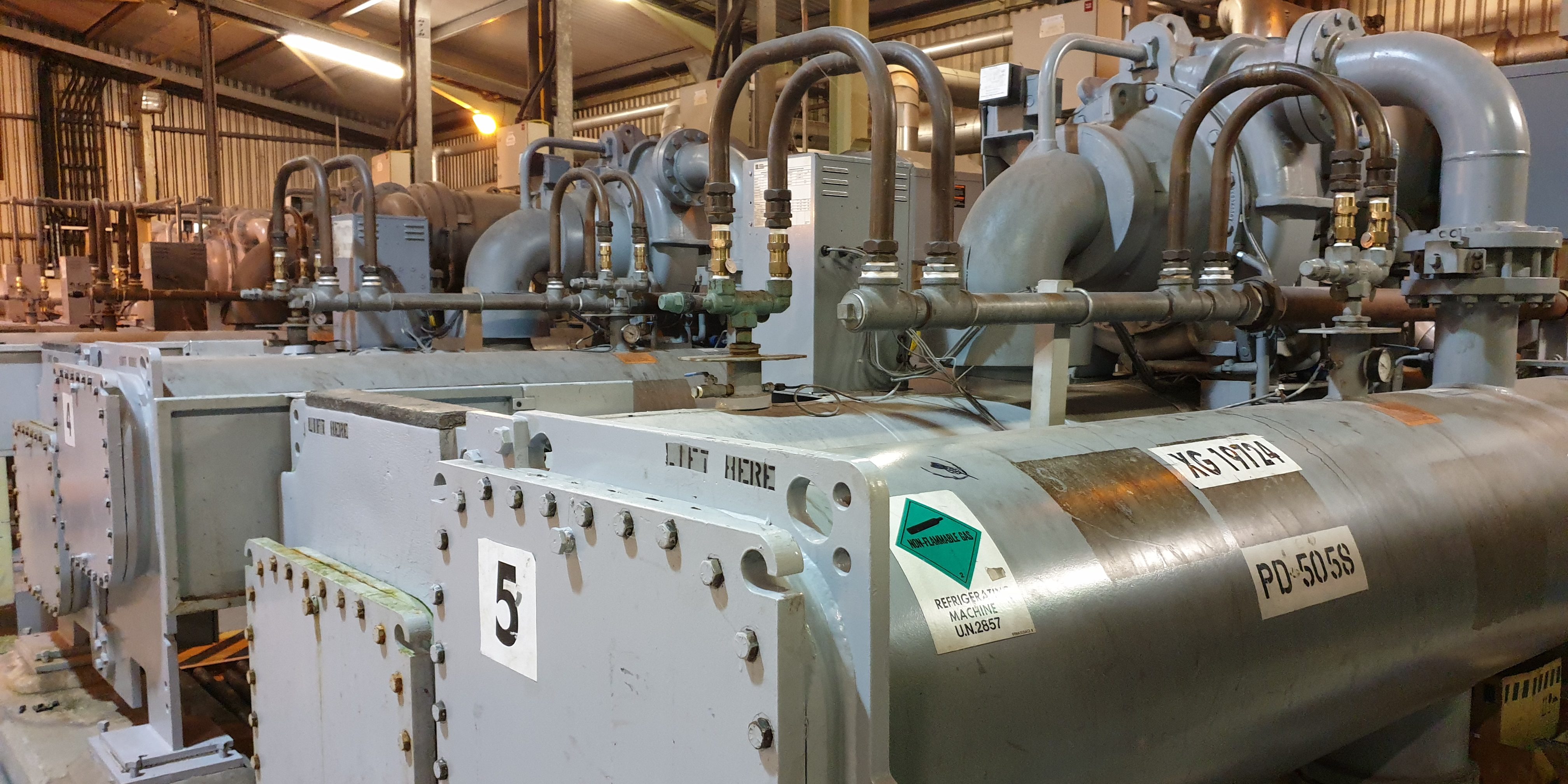
The service of CO2 differs from other refrigerants because the refrigerant operates at high gas pressures. For safety, refrigerant leak detection systems are used. Our detailed maintenance checklist helps keep your chiller in the very best condition and ensures safe and reliable operation.
Your commercial chiller relies on heat transfer efficiency to perform properly. Heat transfer is the process of removing heat from the chiller and then releasing it outside the unit. This is important for all parts of the equipment, especially the refrigeration circuitry.
In simple terms, a chiller's heat transfer efficiency shows how effectively it removes heat from the system. If heat transfer becomes poor, the chiller cannot provide the required cooling performance. In some cases, it may fail to maintain the desired temperature at all.
Contaminants in the condenser are one of the main causes of poor heat transfer. Minerals from hard water, scale formation, algae, and debris can block condenser tubes. Scale build-up on chiller components can also increase thermal resistance, which directly affects cooling efficiency and overall performance.
When these problems occur, the performance of your equipment is sure to suffer. Whether the chiller is used with computer room cooling or for a specific manufacturing process, routine maintenance is essential for smooth and dependable operation.
With regular commercial chiller maintenance, these issues can be prevented before they become major problems. At the very least, this includes clearing condenser tube clogs and brushing the tubes properly at least once a year.

+91 9143592068
+91 8100355748